Quality — TS EN ISO/IEC 17025
Accredited Laboratory
Behind every pipe that reaches site is a measured, reported and traceable chain of testing. Our mechanical testing laboratory is approved by TÜRKAK under TS EN ISO/IEC 17025 — our test results carry national and international validity.
Accreditation
TÜRKAK approved, independent and traceable
TS EN ISO/IEC 17025 is the international standard defining the technical competence of testing laboratories. Approval by TÜRKAK (the Turkish Accreditation Agency) means our equipment calibration is traceable, our personnel are qualified and the impartiality of our results is verified by independent audit.
Our laboratory is accredited by TÜRKAK under accreditation number AB-2154-T, valid until 29.06.2030. Through TÜRKAK's mutual recognition agreements with EA and ILAC, our test reports carry international validity.
What do we test?
Metallic and welded materials: spiral welded steel pipes, steel coils, welded joint specimens and structural steel components. All mechanical verification, from incoming inspection to product acceptance, is performed under one roof.
- Incoming inspection — chemical and mechanical verification of every coil
- In-process testing — regular sampling on every production shift
- WPS/PQR welding procedure qualifications — project-specific approvals
- Third-party witness support — DSİ, TSE and customer inspections
Scope of Accreditation — AB-2154-T
Accredited mechanical tests
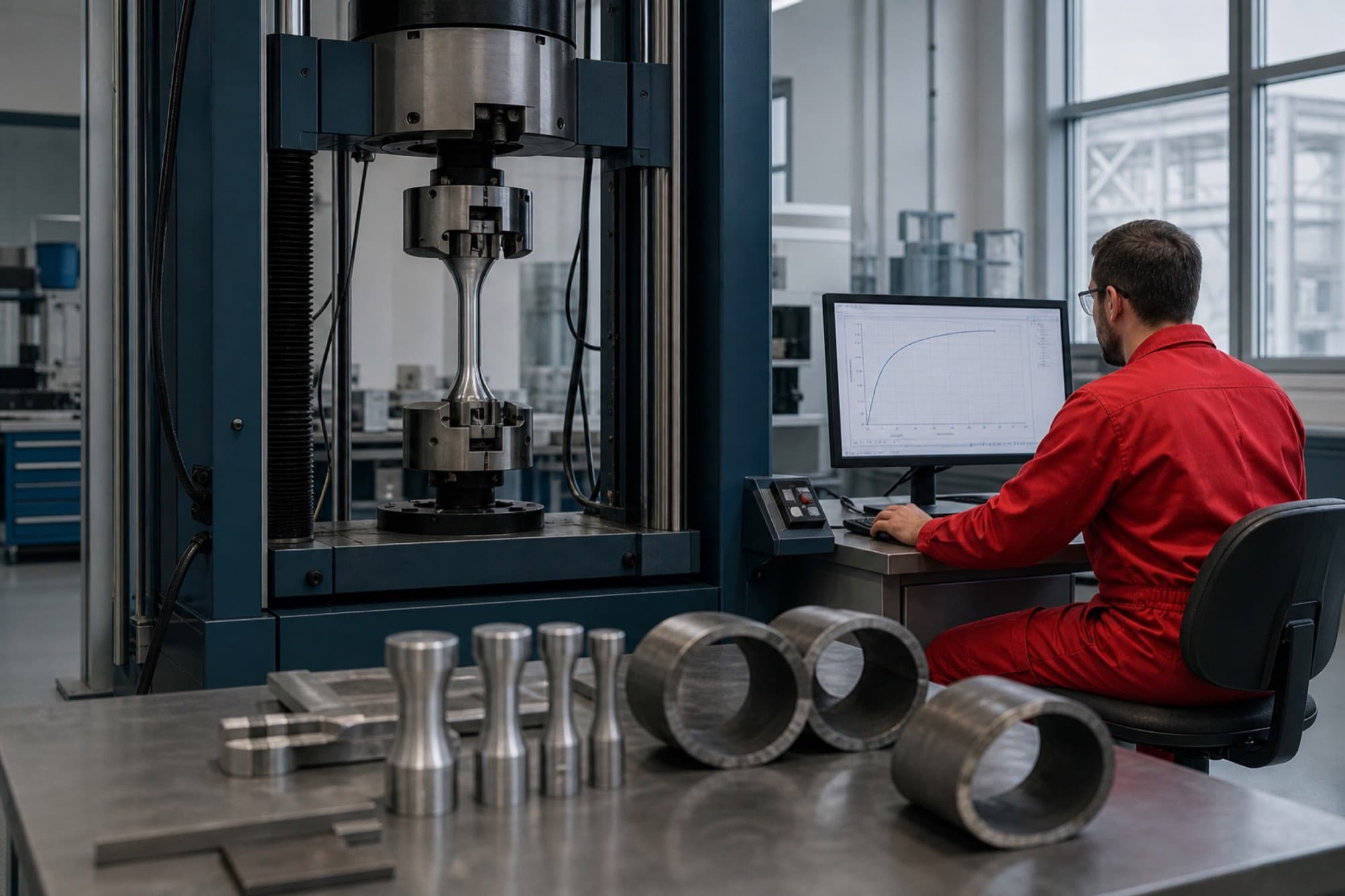
Tensile Strength Determination. Yield strength, tensile strength and elongation of the base material and welded joints are determined at ambient temperature in the 30–600 kN range — the basis of acceptance criteria for X42–X80 line pipe grades.
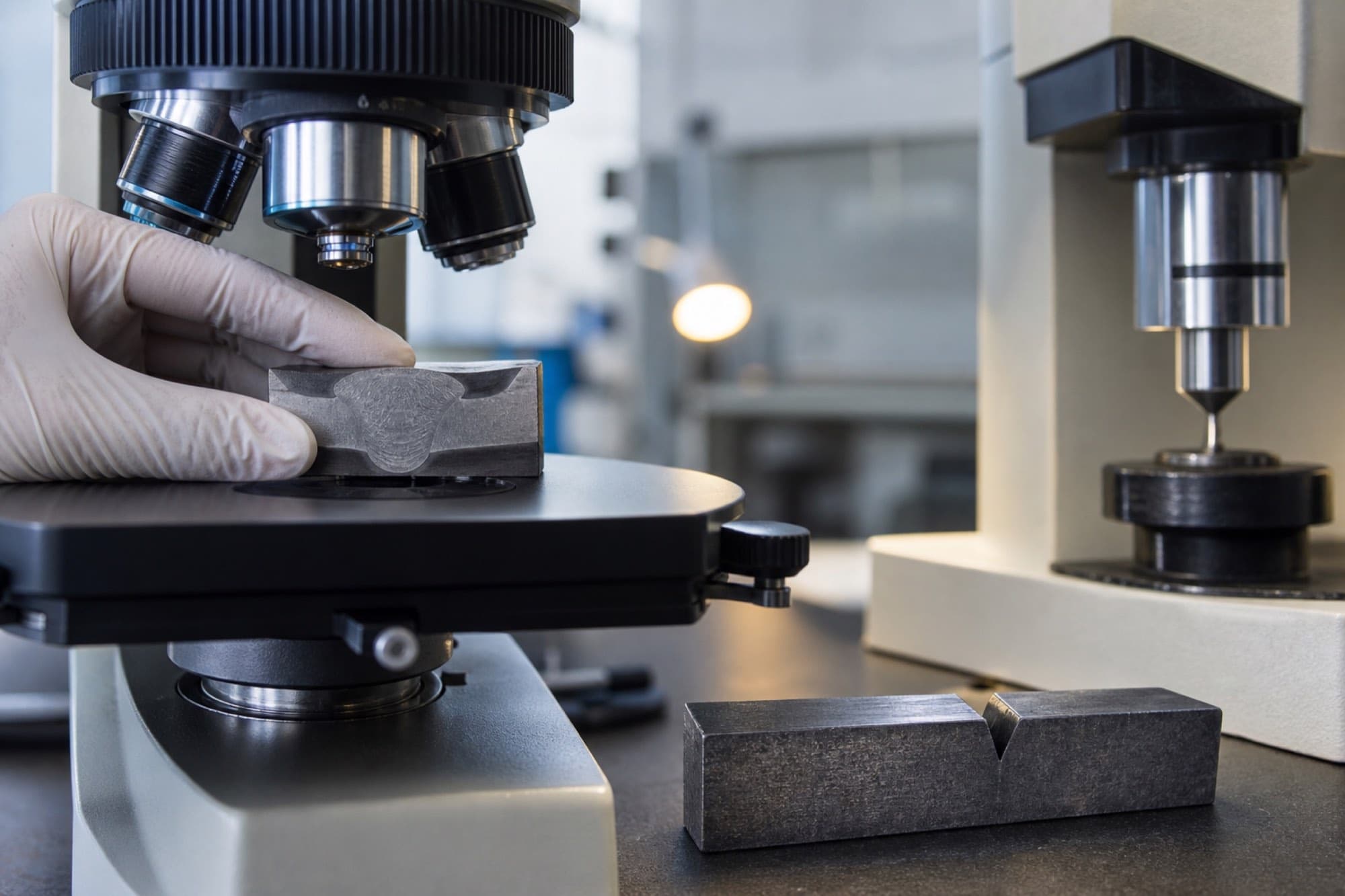
Charpy V-Notch Impact Test. Fracture toughness is measured on V-notched specimens with a 500 J pendulum, at room temperature and at −20 °C — the decisive test for cold-climate and high-pressure lines.
Bend Test. Specimens taken from welded joints are bent in root and face directions to verify the ductility of the weld metal and heat-affected zone.
Vickers Hardness Test (HV10). Hardness surveys across weld metal, HAZ and base material keep excessive hardening and cracking risk under control.
Optical Emission — Spectral Analysis. C, Si, Mn, P, S, Cr, Ni, Cu and Al contents are determined in carbon and low-alloy steels; every steel coil is chemically identified before entering production.
The scope above is taken from the annex of the TÜRKAK accreditation certificate (Rev. 00 — 29.06.2026) and covers metallic and welded materials.
Laboratory
Contact details
Feedback, complaints and suggestions