
Production — Surface Protection
Coating and Surface Protection
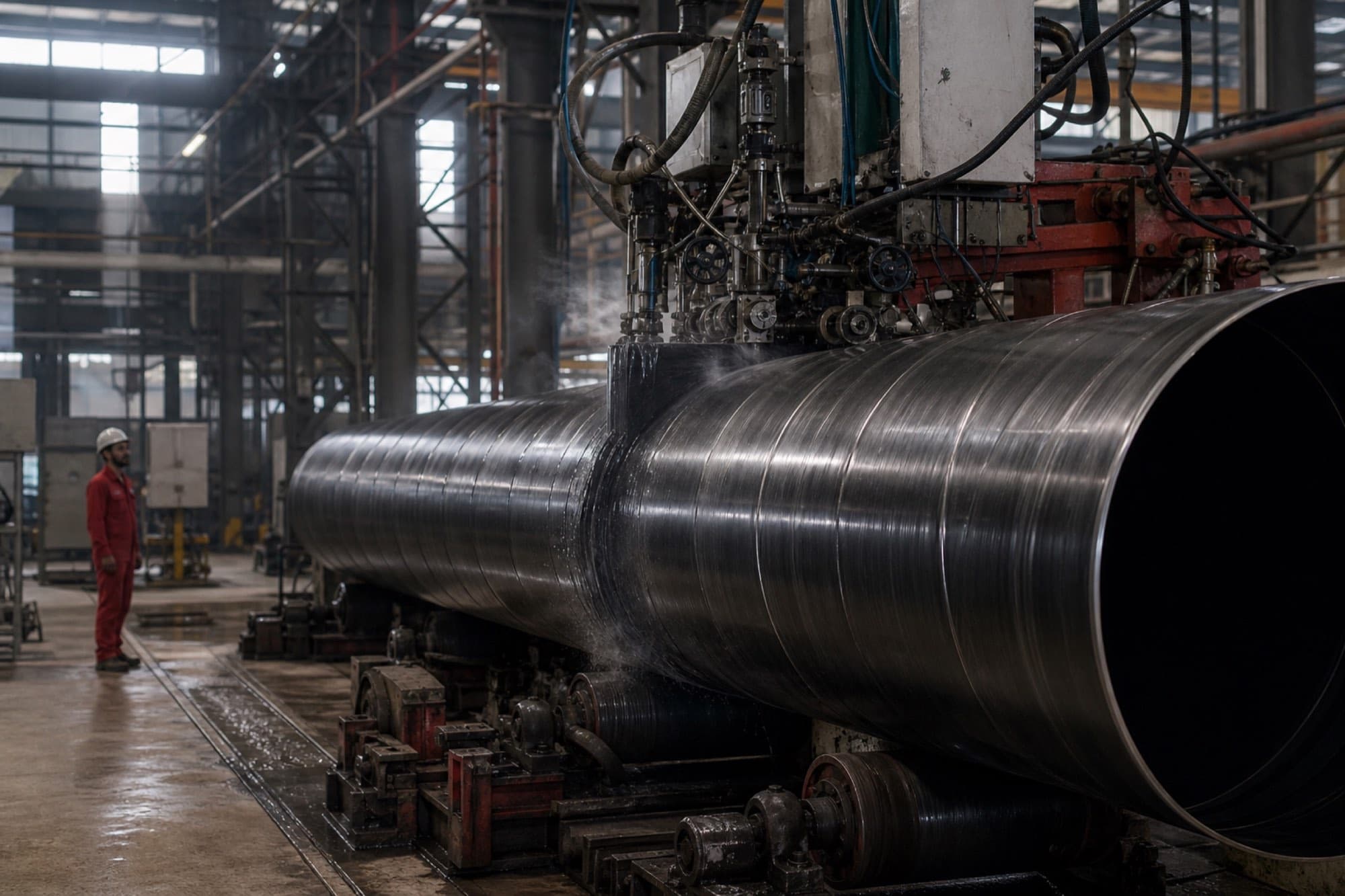
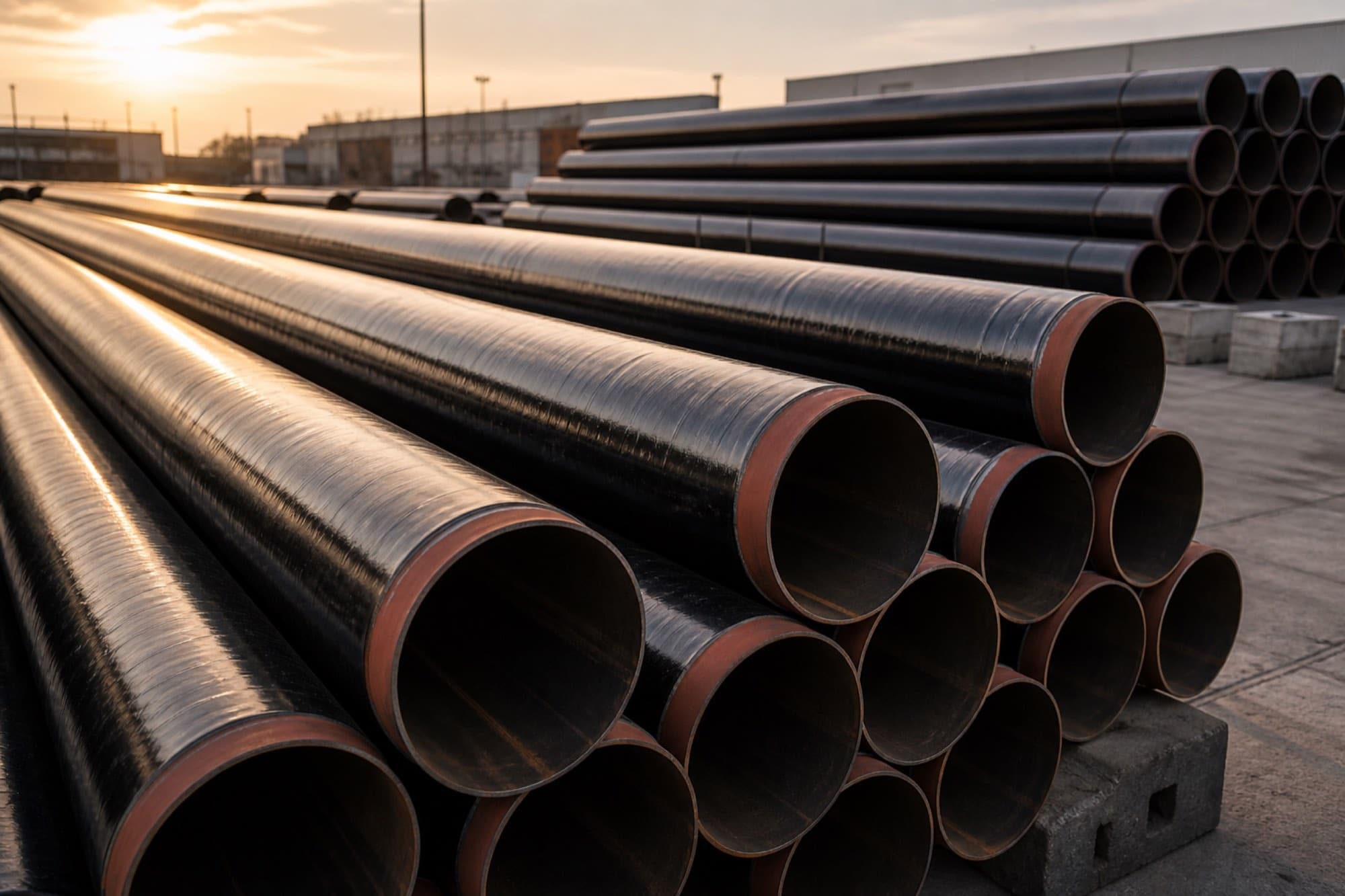
What determines the life of a steel pipe is often not the steel itself, but its surface. On our certified coating line we apply three-layer polyethylene, liquid epoxy external and liquid-applied epoxy internal lining systems — and every pipe passes a holiday test before dispatch.
Certified Systems
Three coating systems, four standards
The coating system is selected according to the soil, pressure and fluid conditions of the project. Every system we apply can be verified against the documents on our certificates page.
Three-Layer Polyethylene External Coating. A three-layer system of epoxy primer, copolymer adhesive and extruded polyethylene. The most widely specified external protection for buried lines against corrosion, moisture and mechanical impact.
Liquid Epoxy External Coating. A chemically resistant liquid epoxy system applied on complex geometries and joints — complete protection for fittings, special parts and field weld areas.
Liquid-Applied Epoxy Internal Lining. A smooth, liquid-applied epoxy internal lining (adhesion class 2) for onshore and offshore water pipelines. Improves flow efficiency, prevents internal corrosion and protects water quality.
Application Process
Six steps from blasting to holiday testing
Surface Preparation — Blasting
The pipe surface is grit-blasted to Sa 2½ cleanliness; oil, rust and mill scale are fully removed. This is the single most critical step for coating adhesion life.
Heating and Fusion Bonded Epoxy (FBE) Primer
The pipe is induction-heated to coating temperature; electrostatic epoxy powder fuses onto the steel surface, forming the first barrier against corrosion.
Copolymer Adhesive Layer
While the epoxy is still in gel state, a copolymer adhesive is extruded, creating a chemical bond between the epoxy and the polyethylene.
Polyethylene Extrusion
The outer polyethylene layer is spirally wrapped onto the rotating pipe and rolled. Thickness is set by pipe diameter and project specification.
Controlled Cooling
The coated pipe is cooled with water under control, allowing the layers to settle homogeneously and without internal stress.
Holiday Testing and Final Inspection
The entire surface is scanned with a high-voltage holiday detector; the smallest coating discontinuity is detected and repaired. Thickness and adhesion checks are reported before dispatch.
Quality Assurance
Four checks before every pipe ships
- Dry film thickness measurement — multiple points around every pipe
- Holiday (porosity) test — 100% surface scan with a high-voltage detector
- Adhesion (peel) test — verifies layer bonding to steel and to each other
- Visual inspection — surface uniformity, cutbacks and end preparation
Why does it matter?
In a buried water or energy line, a coating defect is the main cause of corrosion and outages that surface years later. With 100% holiday scanning and reported thickness measurements, the protective layer of every pipe that reaches site is documented.